
Protecting tigers and people of the Sundarbans, India, in the aftermath of cyclone Amphan
In May 2020, Cyclone Amphan hit India, including the Sundarbans World Heritage site, home to the Bengal tiger and millions of people. Following the destruction caused, quick action was needed to save the lives of both people and tigers. The Rapid Response Facility (RRF) supported WWF India to restore essential human-tiger conflict prevention measures that were damaged by the storm.
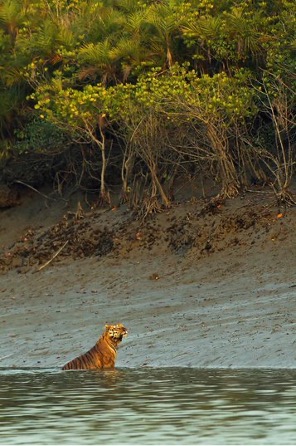
The Sundarbans is the world’s largest contiguous mangrove forest, expanding across India and Bangladesh. Located at the mouth of the Ganges and Brahmaputra rivers, these forests are home to the magnificent Bengal tiger. Uniquely adapted to the mangrove ecosystem, the Sundarban tigers are strong and skilful swimmers, adept at hunting within the harsh, muddy terrain.
The Indian Sundarbans are also home to 4.5 million people. Living in close proximity to these forests and dependent on its natural resources, these communities often risk coming into close contact with wild animals (including tigers). Unfortunately, these interactions can cause tragic loss of life on both sides. Reducing these instances and negative interactions is, therefore, vital.
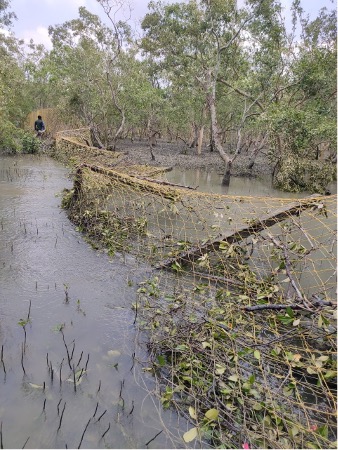
One measure to achieve this is a ‘tiger fence’, to ensure separation between the tiger habitat and human-dominated areas, acting as a physical and psychological barrier. In partnership with the Forest Department, in 2018 WWF India installed tiger fencing along the fringes of villages in the World Heritage site area. Since then, no tigers had strayed into areas of human habitation, until the cyclone hit.
The emergency
Super cyclone Amphan made landfall in the Sundarbans in May 2020. It was moving at around 130km per hour, devastating local livelihoods and infrastructure. Around 80% of existing tiger fencing in the Sundarbans was damaged, the cyclone splitting the netting and uprooting the bamboo poles that supported it.
The situation was further exacerbated by the COVID-19 pandemic, as many locals had returned to the area from big cities, increasing pressure on the natural resources and the probability of human-tiger interface.
The response
RRF supported WWF India, in collaboration with the West Bengal Forest Directorate and the local community, to replace at least 50km of nylon net fencing in strategic locations. The organisations purchased and replaced damaged bamboo poles and fibre/nylon netting around key areas. In the months following the restoration of the fencing, no incidents of tiger incursions into human habituated areas were reported, effectively protecting the lives of both people and tigers.
As communities rebuilt their lives following the devastating cyclone, protection from tigers that might have unwittingly wandered into human settlements, without the fencing in place, was key. The fences reinforced the security of the community, who were able to go about their daily routines without fear and disruption of tiger straying incidences.
A standard operating procedure was established to address gaps in the fencing for the future, which will be vital to maintain the effectiveness of the fences and reduce negative interactions.
Extreme weather presents an unpredictable threat to humans and nature and can exacerbate human-wildlife conflicts. In the Sundarbans the RRF was able to provide emergency funding to restore human-tiger conflict mitigation methods, reducing the possibility of fatalities on both sides. As climate change disrupts global weather patterns, there will be a greater and more immediate need to combat the impacts of extreme weather on wildlife and human populations.
Quote from the applicant:
“The main strength for RRF is their willingness to support conservation causes in a short period of time over other sources of funding. RRF has been very understanding throughout the process and extended their support at every turn.” – WWF India