
Safe surveillance during instability in Virunga National Park, DRC
In early 2025, security in eastern Democratic Republic of Congo (DRC) became highly volatile, placing both park rangers and wildlife in Virunga National Park (VNP) at serious risk. In response, the RRF provided emergency support to restore the park’s aircraft, enabling aerial surveillance of the park, safe emergency operations, and the monitoring and assessment of conservation impacts resulting from the unrest.
Virunga National Park, a UNESCO Natural World Heritage site in Eastern DRC, covers an area of approximately 790,000 hectares. The park encompasses a remarkable mosaic of landscapes including the snowy tops of the Rwenzori Mountains, the dry savannah of the Semliki valley, Lake Edward and the afro-alpine mountain gorilla habitat of the Virunga volcanoes. The region is renowned for its high faunal and floral diversity, supporting over 3,000 species, more than 10% of which are endemic to the Albertine Rift. The park shelters several of the world’s iconic megafauna including, mountain gorilla, African elephant, eastern chimpanzee, golden monkey, hippopotamus, and African buffalo.
Virunga National Park has faced persistent security challenges for decades, which led to its inclusion on UNESCO’s List of World Heritage in Danger in 1994. Heightened insecurity in and around the park continued into 2025, creating a difficult environment for conservation work. These challenges have had a significant impact on park operations and continue to place pressure on the park’s neighbouring communities and endangered wildlife. Despite these obstacles, the park remains committed to its mission, maintaining critical conservation and community development efforts wherever conditions allow.
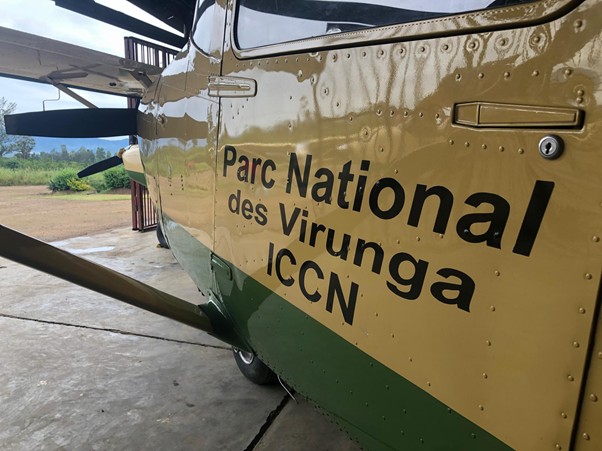
In response, the RRF granted $40,000 to the Virunga Foundation to restore the park’s Cessna 206 aircraft and return it to operational use. The aircraft plays a vital role in monitoring the vast area of the park. With the aircraft now fully functional, it can once again provide aerial surveillance and essential logistical support, including emergency evacuations of staff, and the transportation of equipment.
By providing early warning of activity across the park, the aircraft will help coordinate ranger deployment and field operations, improving ranger safety and operational effectiveness, and enabling rapid responses to conservation threats during this period of instability.